
By late 2025, the conversation around technology shifted. For years, we lived in a cycle of breathless anticipation, waiting for the "next big thing" to fundamentally change our lives. But if you look closely at the last twelve months, the story wasn’t about a single shiny gadget or a new buzzword. It was about something far more profound: utility.
This was the year technology stopped merely dazzling us with possibilities and started doing the heavy lifting. From artificial intelligence that acts rather than just speaks, to medical breakthroughs that restore senses we thought were lost to time, the tech landscape has matured. We are no longer just building the future; we are beginning to inhabit it.
The Rise of "Agentic" AI
For the past few years, the world was captivated by generative AI—chatbots that could write poetry or generate surreal images. But in 2025, the novelty of talking to a machine wore off, replaced by the utility of working with one. We entered the era of "Agentic AI."
Unlike their predecessors, which waited passively for a prompt, these new AI agents function with a level of autonomy that feels strikingly human. They don’t just answer questions; they solve problems. Google’s Gemini 3 and the open-source breakthroughs from DeepSeek have demonstrated "reasoning" capabilities—the ability to "think" through a chain of logic before acting. Consider the shift in software development. With tools like Google’s Antigravity, we aren't just seeing AI suggest lines of code; we are seeing it collaborate as a partner, debugging complex systems and managing workflows that used to bog down human developers. For the average user, this means the friction of digital life is smoothing out. Your digital assistant can now navigate a refund process, book a complex multi-city trip, or manage your calendar conflicts without you needing to micromanage every step. The "co-pilot" has become the pilot, allowing us to focus on the destination rather than the controls.
Medicine’s Quiet Revolution
While AI dominated the headlines, the most heartwarming breakthroughs occurred quietly in hospitals and clinics, where technology began to rewrite the human experience of aging and illness.
Perhaps the most tangible example of this human-centric innovation is VIZZ, a newly approved eye drop that effectively treats age-related farsightedness. For millions of people who have resigned themselves to carrying reading glasses everywhere, this is not just a pharmaceutical product; it is a restoration of normalcy. Being able to read a menu or a text message without fumbling for frames is a small dignity, but one that technology has now returned to the aging population.
On a more critical front, 2025 saw a monumental leap in pediatric care. Researchers at Duke University Medical Center perfected "on-table reanimation," a technique that allows hearts from donors who have suffered circulatory death to be revived and transplanted. This effectively widens the donor pool for infants, turning a desperate wait for a miracle into a manageable medical process. These are the innovations that don’t always make the splashy keynote presentations but matter most when life hangs in the balance.
The Invisible Computer
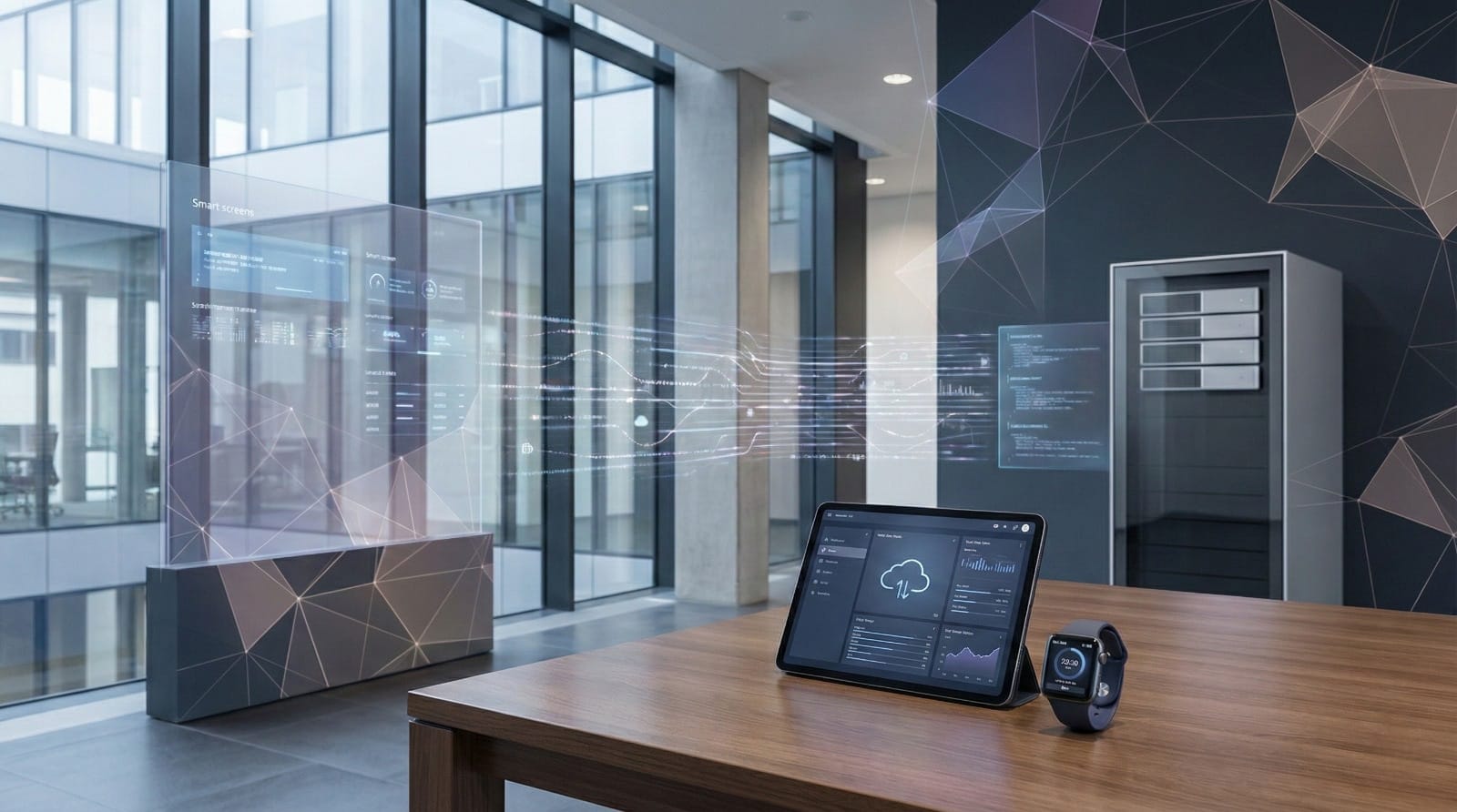
In the consumer space, the rectangular slabs of glass in our pockets are no longer the sole center of our digital universe. The trend this year has been "spatial computing," but not in the isolating, goggle-wearing way many feared. Instead, technology is becoming ambient—woven into the fabric of our daily lives.
Wearables have graduated from simple step counters to clinical-grade health guardians. The latest smart rings and watches are now equipped with sensors capable of continuous blood pressure and glucose monitoring, offering a "check engine light" for the human body that is always on. This shift from reactive treatment to proactive wellness is reshaping the relationship between patients and doctors, providing data that can catch chronic conditions before they become acute crises.
Simultaneously, the smart home has finally gotten "smart." Thanks to the new reasoning capabilities of AI, our homes are moving beyond rigid automation schedules. Your thermostat and lighting systems now understand context—recognizing that you’re working late or hosting a dinner party—and adjusting the environment without a command. The goal is no longer to interact with technology constantly, but to have technology support us invisibly.
Powering the Future
Underpinning all these digital advancements is a physical reality: the immense energy required to run them. The explosion of AI and data centers created a voracious appetite for power, challenging our climate goals. However, 2025 may well be remembered as the turning point for renewable energy.
For the first time, global carbon emissions are showing signs of structural decline, driven by a massive rollout of renewable capacity. Europe hit record highs in solar and wind adoption, but the real story is in storage. Battery technology has accelerated, allowing us to store the sun’s energy for the dark hours more efficiently than ever before. We are seeing a divergence in the energy market—while some regions struggle with grid infrastructure, others are successfully decoupling economic growth from carbon emissions.
Furthermore, the "moonshot" of quantum computing took a giant leap toward reality. Google’s Willow chip and Microsoft’s work with "logical qubits" have moved the field past the era of noisy, error-prone experiments. We are inching closer to error-corrected quantum computers that can simulate molecular interactions with perfect accuracy. The implications for materials science—designing better batteries or carbon-capture materials—are staggering. We aren't just finding new ways to burn energy; we are inventing new physics to save it.
The Rules of the Road
Of course, this rapid acceleration brings friction. 2025 was also the year regulation tried to catch up with reality. The geopolitical landscape of technology has fractured, with the US and China engaging in a high-stakes competition for dominance in AI and chip manufacturing. This "silicon curtain" is reshaping global supply chains and forcing nations to pick sides.
In Europe, the implementation of the AI Act and strict cybersecurity directives like NIS2 has forced companies to prioritize safety and transparency. We are seeing the first real-world tests of these laws: Can you regulate AI without strangling it? The consensus from industry experts is cautiously optimistic. There is a growing realization that "move fast and break things" is no longer a viable strategy when the things being broken are democracies or healthcare systems. Responsible innovation is becoming a competitive advantage, not just a compliance checkbox.
A New Era of Integration
As we look toward 2026, the theme is integration. The boundaries between these sectors are blurring. AI is accelerating the discovery of new renewable energy materials; quantum computing is promising to supercharge drug discovery; and policy is trying to ensure these benefits are distributed equitably.
We have moved past the "wow" phase of technology. We are now in the "how" phase—how we use these powerful tools to build a world that is healthier, more efficient, and more human. The technology of 2025 isn't about escaping reality into a digital metaverse; it’s about using digital tools to improve the physical reality we all share. And that, ultimately, is the only upgrade that really matters.