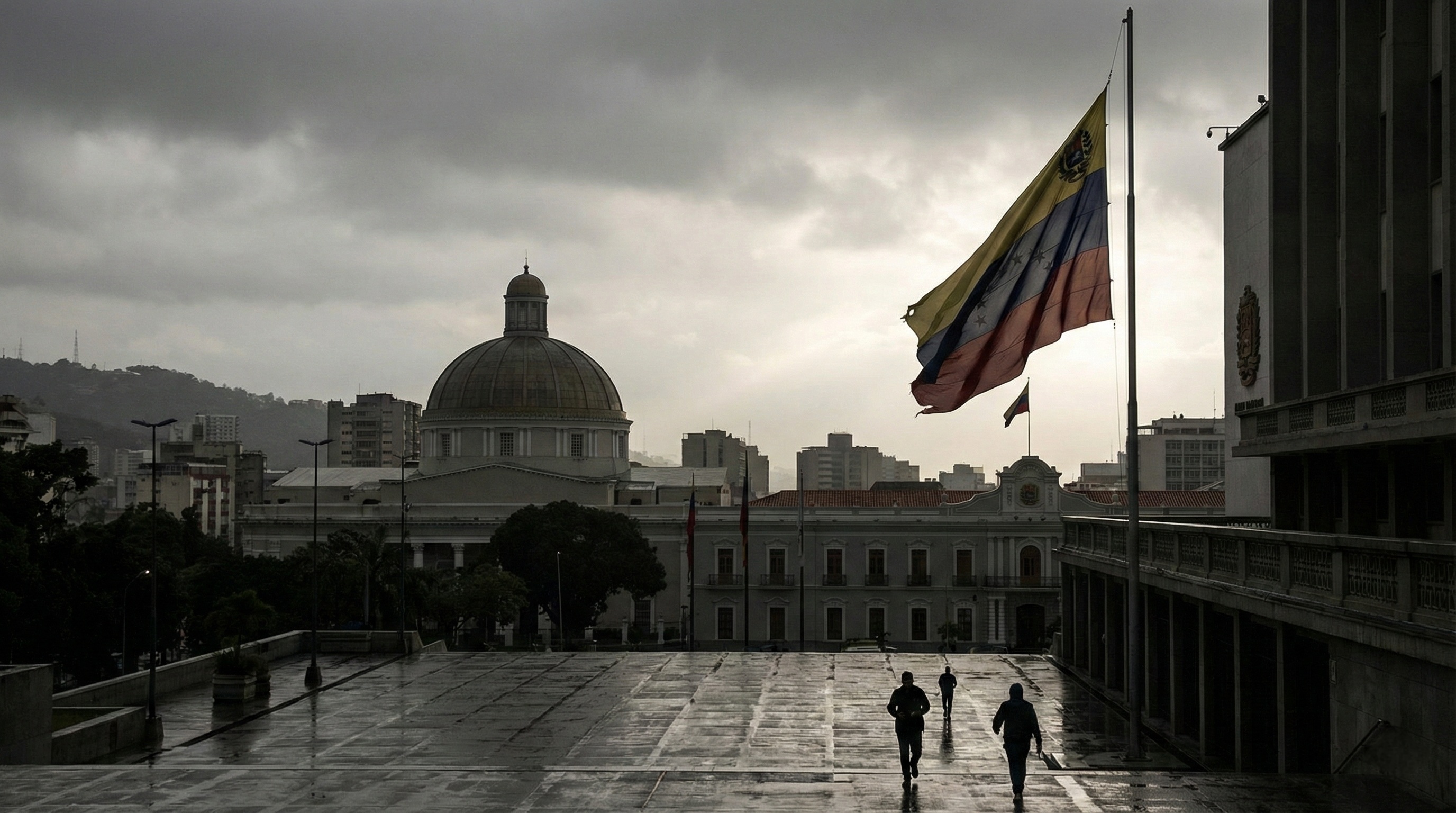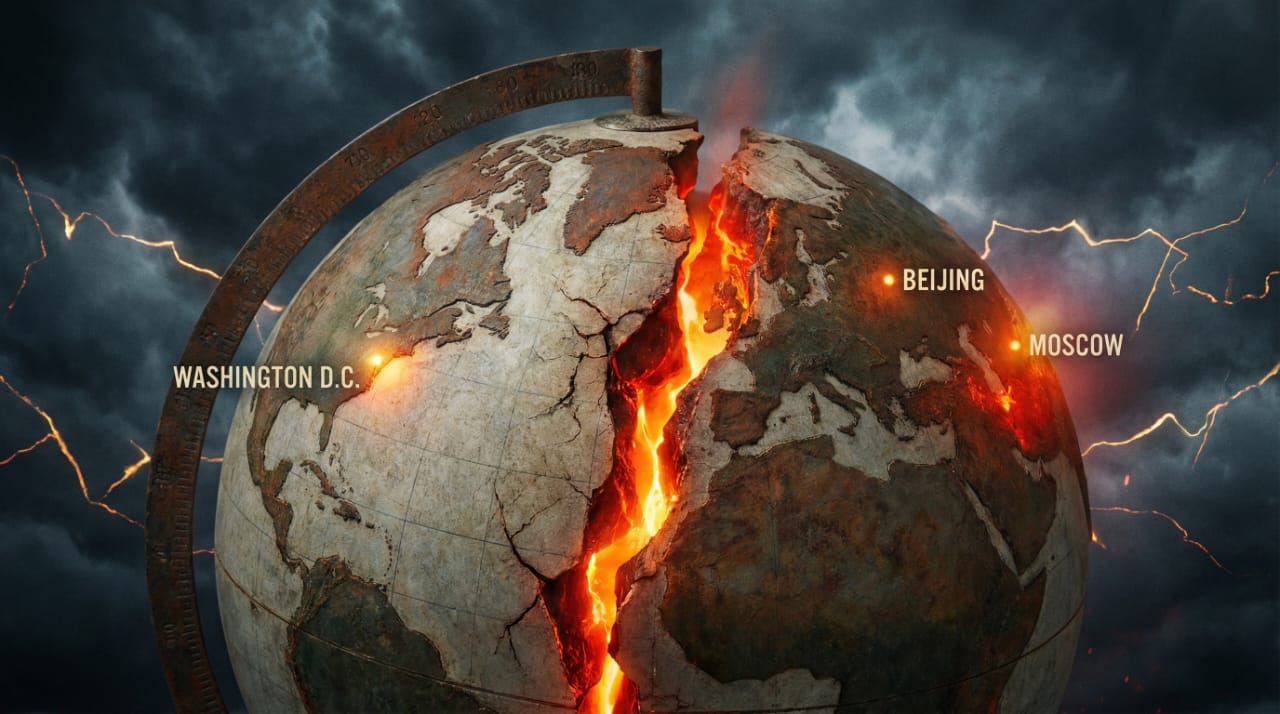

As the sun sets on 2025, historians may well look back at this year not merely as a collection of months, but as the definitive end of the post-Cold War era. If 2024 was the year of "polycrisis"—a convergence of disparate shocks—2025 was the year those shocks calcified into a new, harder reality. From the trade wars reshaping the Pacific to the re-drawing of maps in the Middle East and the grinding attrition in Eastern Europe, the global system has not just bent; it has fractured.
The return of Donald Trump to the White House in January set the tempo for a year defined by transactional diplomacy and the retreat of multilateralism.
This "Year in Review" analysis explores the four seismic shifts that defined global politics in 2025 and what they signal for the uncertain road ahead.
The Return of "America First" and the Trade War of 2025
The inauguration of President Trump on January 20, 2025, was widely predicted to bring change, but few anticipated the velocity with which the global trading system would be upended. fulfilling campaign promises, the administration’s implementation of aggressive tariffs—most notably the 60% levy on Chinese imports and substantial tariffs on European and Mexican goods—triggered a chain reaction that is still reverberating through the global economy.
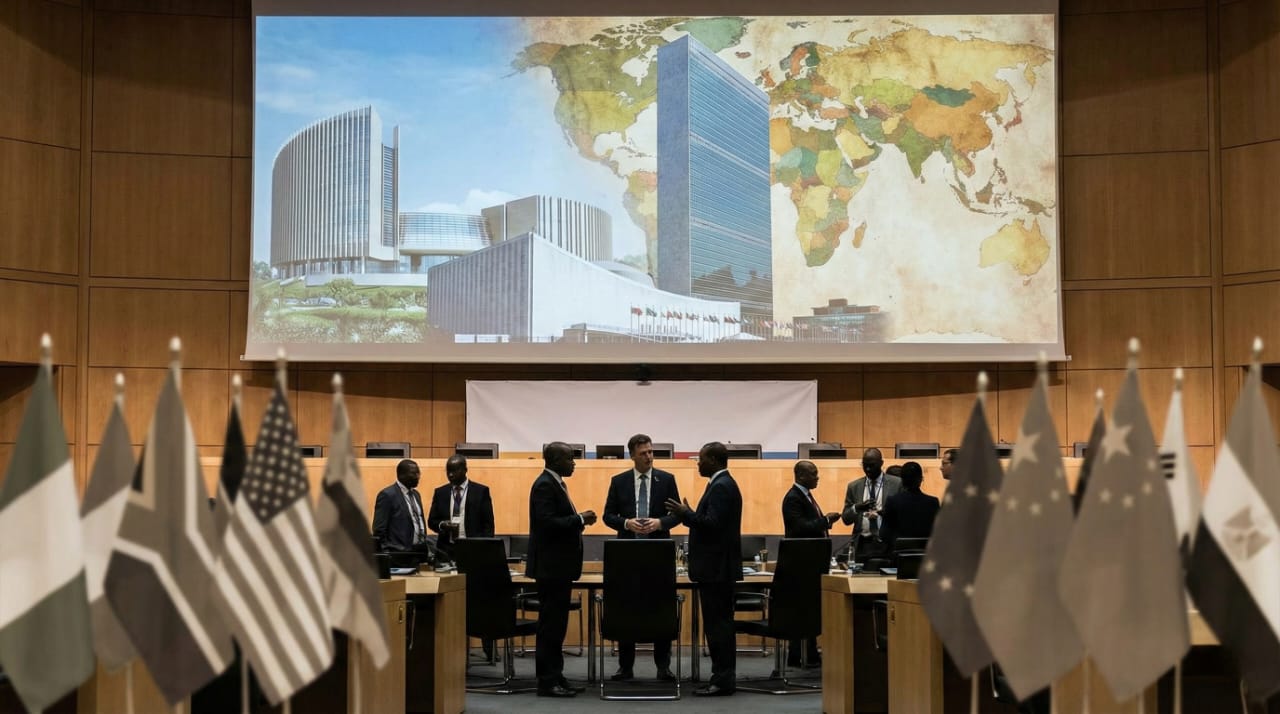
The "Shock of 2025" was not just economic; it was deeply geopolitical. For the European Union, the year has been an existential reckoning. Caught between a protectionist Washington and a surplus-dumping Beijing, Brussels found itself in an impossible strategic bind. The fracturing of the transatlantic trade consensus forced European leaders to make hard choices. We saw this tension peak at the G7 summit in Canada in June, where the polite veneer of alliance barely concealed the deep fissures over climate commitments and trade barriers. For the Global South, the U.S. retreat from multilateral institutions created a vacuum that the expanded BRICS alliance rushed to fill. The 2025 BRICS summit in Brazil was not just a photo opportunity; it was a declaration of intent. The push for "de-dollarization," while still in its infancy regarding technical feasibility, gained massive political capital. Nations from Southeast Asia to Latin America increasingly hedged their bets, refusing to align fully with either the Washington or Beijing consensus, giving rise to a new era of "à la carte" diplomacy.
The Middle East: Post-Assad Uncertainty and the June Flare-up
The Middle East spent 2025 grappling with the aftershocks of the previous year’s seismic events, most notably the collapse of the Assad regime in Syria in late 2024.
However, the region’s instability was underscored by the terrifying "June War" between Israel and Iran.
Meanwhile, the humanitarian catastrophe in Gaza continued to fester, with reconstruction efforts stalled by political deadlock. The "Day After" plans proposed in global capitals failed to materialize on the ground, leaving a vacuum of governance that continues to threaten regional stability. Further south, the overlooked tragedy of Sudan spiraled into what the UN has arguably called the world's worst humanitarian disaster of the decade, with famine conditions spreading as the conflict between the SAF and RSF fragmented the state into fiefdoms.
Eurasia’s Frozen Front and the Exhaustion of War
In Ukraine, 2025 was the year of the "Great Stalemate." As the war entered its fourth year, the frontlines hardened into a World War I-style war of attrition. Despite the infusion of new technology—drone swarms becoming the primary infantry support—neither Kyiv nor Moscow could achieve a decisive strategic breakthrough.
The geopolitical narrative, however, shifted dramatically. With the U.S. administration questioning the scale of aid and European capitals struggling with their own defense industrial limitations, the conversation in the West quietly moved from "total victory" to "sustainable security." The spectre of a negotiated settlement, once taboo, became a grim inevitability discussed in the corridors of the Munich Security Conference in February and the NATO summit in The Hague.
Russia, for its part, completed its transition to a total war economy, deepening its reliance on the "Authoritarian International"—drawing closer to Pyongyang and Tehran for material support. The deployment of North Korean assets to the European theater, confirmed earlier this year, fundamentally internationalized the conflict, linking the security of the Atlantic directly to the security of the Pacific.
The Techno-Polar World: AI and the Chip Blockade
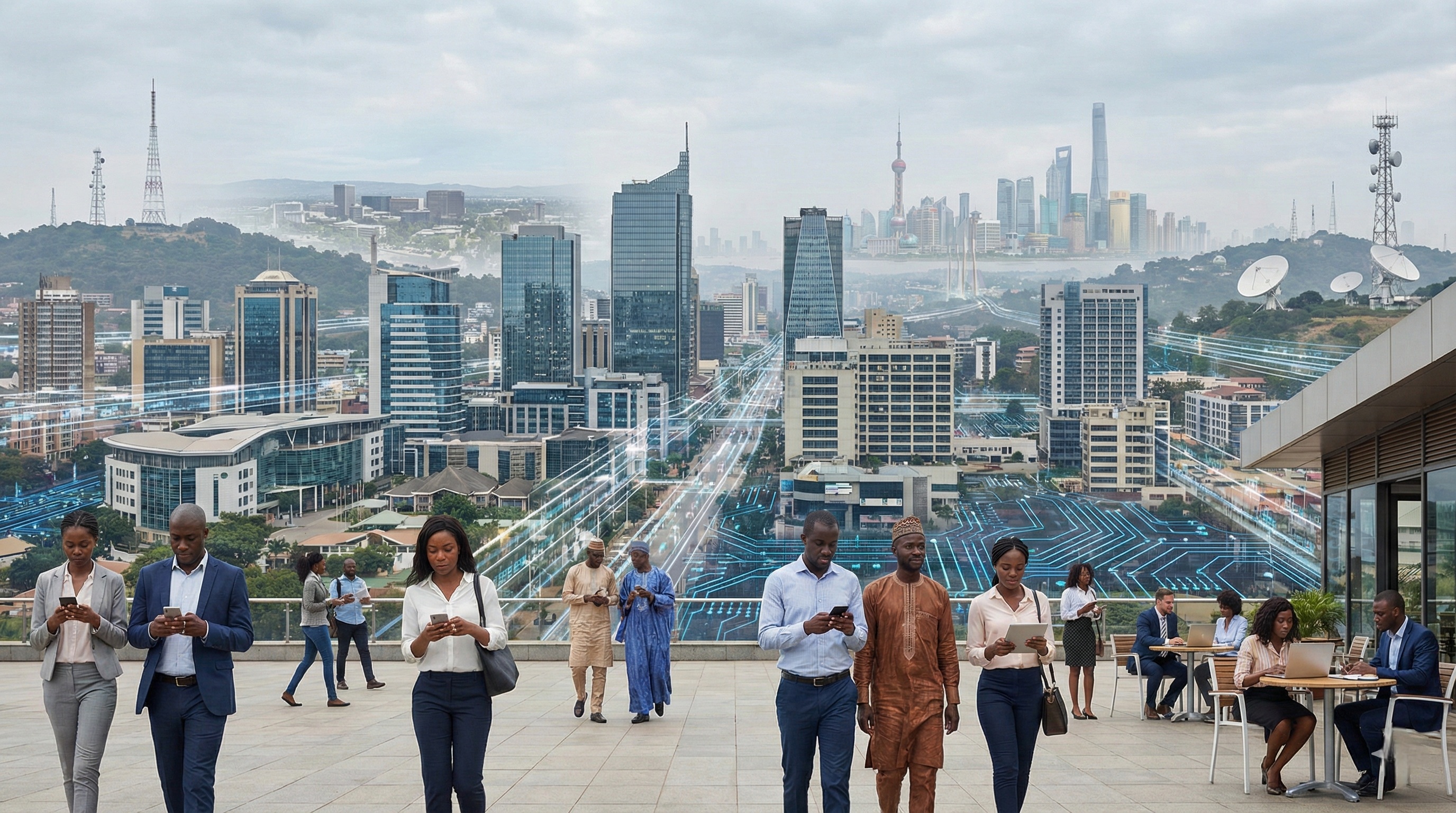
If land and resources defined the conflicts of the 20th century, compute power defined 2025. The "Chip War" escalated from export controls to a full-blown technological blockade. The U.S. and its allies tightened the noose around advanced semiconductor manufacturing, aiming to kneecap China’s AI ambitions. Beijing’s response was a "whole-of-nation" pivot to technological self-sufficiency. 2025 saw the bifurcation of the digital world accelerate; we are now effectively operating on two distinct internets and two distinct technological stacks. The AI Action Summit in France in February highlighted the global desperation to regulate artificial intelligence, but it also exposed the lack of trust. Nations are no longer willing to pool research; they are hoarding data and algorithms as national secrets.
This "digital sovereignty" movement has profound implications for democracy. 2025 saw a record number of state-sponsored cyber intrusions and disinformation campaigns, rendering the concept of "truth" increasingly fluid in democratic elections held across the globe.
Conclusion: Navigating the Fog:
As we enter 2026, the world is not necessarily more dangerous than it was a year ago, but it is certainly less predictable. The guardrails that once kept great power competition within manageable bounds—nuclear treaties, trade rules, diplomatic norms—have been eroded or dismantled.
We have moved from a unipolar world, past the brief hope of a multipolar one, into a "non-polar" world: a chaotic arena of shifting alliances, transactional partnerships, and localized conflicts. For policymakers and business leaders alike, the strategy for the coming year cannot be based on the hope that the old order will return. It must be based on the agility to survive the new disorder.
The lesson of 2025 is clear: In a fractured world, there are no permanent friends and no permanent enemies—only permanent interests, and the raw power to defend them.
Key Data Points for 2025:
Global Growth: Slowed to roughly 2.6% amid trade friction.
Major Elections: Germany (Coalition struggles), Canada (G7 host pressures), Brazil (BRICS leadership).
Tech Milestone: Global AI compute power doubled in 10 months, sparking energy consumption debates at COP30.