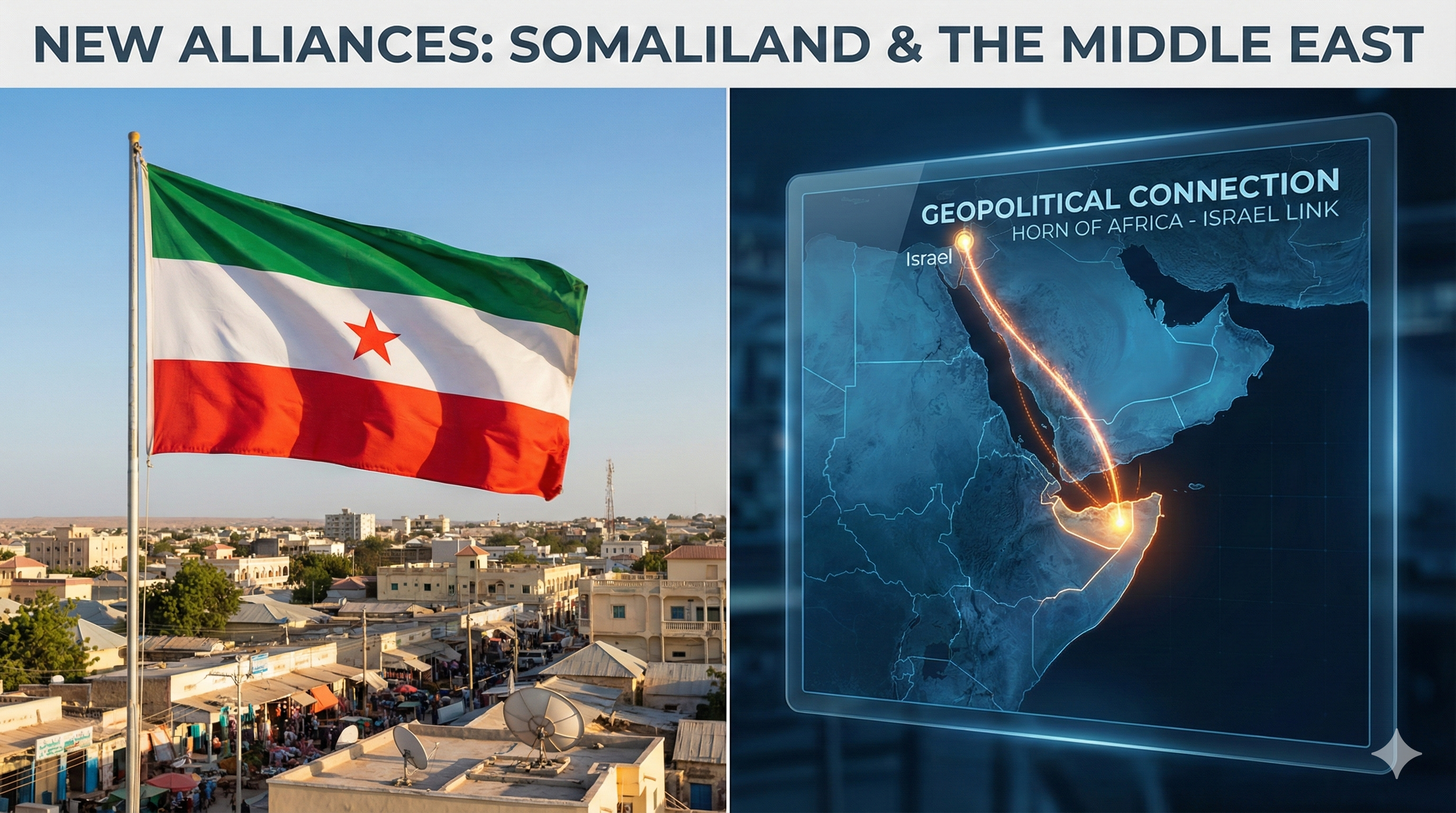

HARGEISA/JERUSALEM — In a geopolitical earthquake that has sent shockwaves through the Horn of Africa and the Middle East, the State of Israel has officially extended full diplomatic recognition to the Republic of Somaliland. The announcement, made late this week, marks the first time a major non-African power has formally acknowledged the independence of the breakaway region since it declared autonomy from the Somali Republic in 1991.
A 33-Year Quest for Legitimacy
For the government in Hargeisa, this development represents the culmination of over three decades of tireless diplomatic lobbying. Since reclaiming its sovereignty following the collapse of the Siad Barre regime, Somaliland has maintained a functioning government, a distinct currency, a trained army, and arguably the most democratic political system in the region. Despite these achievements, international recognition has remained elusive, with the African Union and the United Nations strictly adhering to the "One Somalia" policy.
President Muse Bihi Abdi of Somaliland welcomed the move as a "victory for justice and self-determination." In a televised address, he stated, "Today, the world begins to see what we have built. This recognition is not a gift; it is an acknowledgement of the reality on the ground. Somaliland is open for business, and we are ready to take our rightful seat among the community of nations."

Strategic Interests in the Red Sea Analysts suggest that Israel’s decision is driven less by ideology and more by hard-nosed security strategy. Somaliland sits on the southern coast of the Gulf of Aden, overlooking the Bab el-Mandeb strait—a critical choke point for global trade and a flashpoint for maritime security. With tensions rising in the Red Sea due to Houthi activities in Yemen, Israel views Somaliland as a vital strategic partner.
Diplomatic sources indicate that the recognition deal likely includes provisions for security cooperation, intelligence sharing, and potentially the establishment of a naval outpost or logistics hub at the port of Berbera. This would grant Israel a significant foothold in the Horn of Africa, allowing it to better monitor Iranian influence and secure shipping lanes essential to its economy.
Fury in Mogadishu The reaction from the Federal Government of Somalia (FGS) was immediate and furious. Somalia considers Somaliland to be its northern territory and has long viewed any direct engagement with Hargeisa as a violation of its national sovereignty.
Somali government officials convened an emergency cabinet meeting in Mogadishu, declaring Israel’s move "null and void." A spokesperson for the Ministry of Foreign Affairs condemned the decision as a "blatant act of aggression against the territorial integrity of the Federal Republic of Somalia." Mogadishu has threatened to sever ties with any nation that follows Israel’s lead and has called for an urgent meeting of the United Nations Security Council to discuss the matter.
Regional and Global Fallout The move has placed the United States and the European Union in a delicate position. While Washington maintains a "One Somalia" policy, it has increased its informal engagement with Somaliland in recent years, particularly regarding the usage of the Berbera port for military contingencies. Israel’s unilateral move forces Western powers to choose between maintaining the status quo or accepting a new reality in the Horn.
Meanwhile, the decision has drawn sharp rebuke from the Arab League and Turkey, both of whom have strong ties to Mogadishu. Egypt, in particular, views the fragmentation of Somalia as a security threat, especially given its own tensions with Ethiopia over the Nile dam. The recognition risks polarizing the region further, potentially drawing the Horn of Africa into a proxy struggle involving Middle Eastern powers.
The Road Ahead As the flag of Somaliland is prepared to fly over a new mission in Tel Aviv, the question remains: will this trigger a domino effect? Other nations in Africa and Europe have long watched Somaliland’s case with sympathy but have been hesitant to break rank with the African Union. If Israel’s move is followed by economic investment and security guarantees, it could embolden other states to recognize Hargeisa, fundamentally redrawing the map of East Africa.