
East Africa has increasingly emerged as one of the most closely watched regions on the continent, not only because of its strong growth projections but also due to the wider implications those projections hold for Africa as a whole. While economic forecasts are often treated as abstract numbers, in the case of East Africa they tell a deeper story—one that connects regional resilience, continental trade ambitions, and Africa’s long-term development trajectory.
Recent projections highlight East Africa as one of the fastest-growing sub-regions in Africa, driven by population growth, expanding consumer markets, infrastructure investment, and rising regional integration. Countries such as Kenya, Ethiopia, Tanzania, Rwanda, and Uganda are positioning themselves as engines of growth through manufacturing, logistics, agriculture modernization, and digital innovation. These developments do not exist in isolation; they influence supply chains, investment flows, and policy confidence across the continent.
One of the most significant reasons East Africa’s economic outlook matters to the rest of Africa is trade. As the African Continental Free Trade Area (AfCFTA) gains momentum, East Africa’s ports, transport corridors, and production hubs are becoming essential gateways linking landlocked countries to global markets. Strong economic performance in East Africa enhances intra-African trade, reduces dependency on external markets, and strengthens Africa’s bargaining position in the global economy.
Another critical factor is demographic momentum. East Africa’s young and rapidly growing population represents both opportunity and responsibility. If growth is matched with education, skills development, and job creation, the region could supply Africa with a productive workforce that fuels innovation and entrepreneurship. Failure to do so, however, would turn economic projections into missed opportunities. For the rest of Africa, East Africa’s success or struggle in managing this demographic shift offers important lessons.
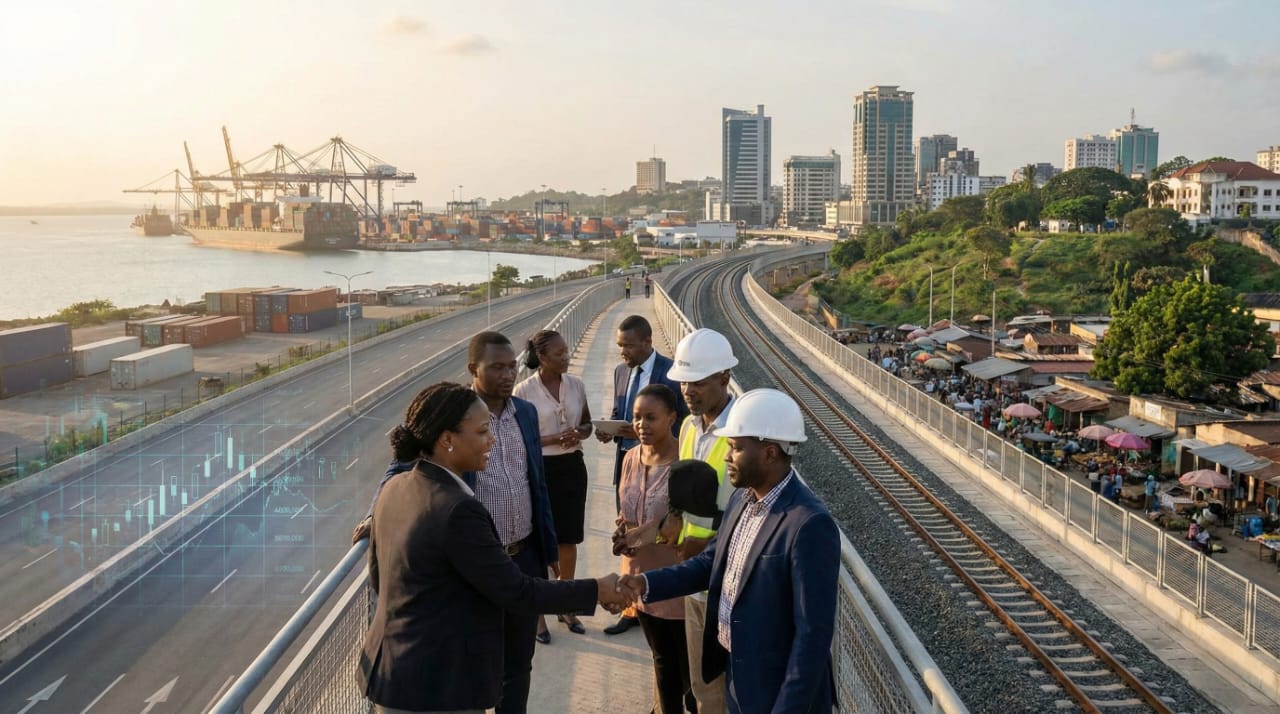
Infrastructure development further amplifies East Africa’s continental relevance. Investments in railways, energy projects, digital connectivity, and urban development are not only transforming national economies but also creating regional public goods. Improved connectivity lowers the cost of doing business across borders and supports Africa’s vision of economic integration.
Yet optimism must be balanced with realism. East Africa continues to face challenges including debt pressures, climate vulnerability, food insecurity, and inequality. Economic growth alone does not guarantee inclusive development. How the region addresses these issues will shape perceptions of Africa’s overall growth narrative—either reinforcing confidence or deepening skepticism among investors and development partners.
Ultimately, East Africa’s economic projections matter because they reflect Africa’s broader struggle to convert growth into sustainable prosperity. The region stands at a crossroads where sound leadership, regional cooperation, and strategic investment could turn positive forecasts into lasting transformation. For Africa, East Africa is not just a sub-region to watch—it is a test case for the continent’s economic future.
Source of inspiration:
African Leadership Magazine – “Why East Africa’s Economic Projections Matter to the Rest of Africa”