
As the global economy stumbles through the latter half of 2025, weighed down by trade fragmentation and sluggish growth in the West, East Africa has emerged as a paradox of immense potential and stubborn challenges. While not immune to the shockwaves of global inflation and geopolitical tension, the region—anchored by the economic engines of Kenya, Tanzania, Ethiopia, and Rwanda—is currently outperforming almost every other bloc on the continent. The narrative emerging from Nairobi, Addis Ababa, and Dar es Salaam is no longer just about "potential" or "rising," but about a complex structural transition from agrarian subsistence to a diversified, interconnected regional powerhouse.
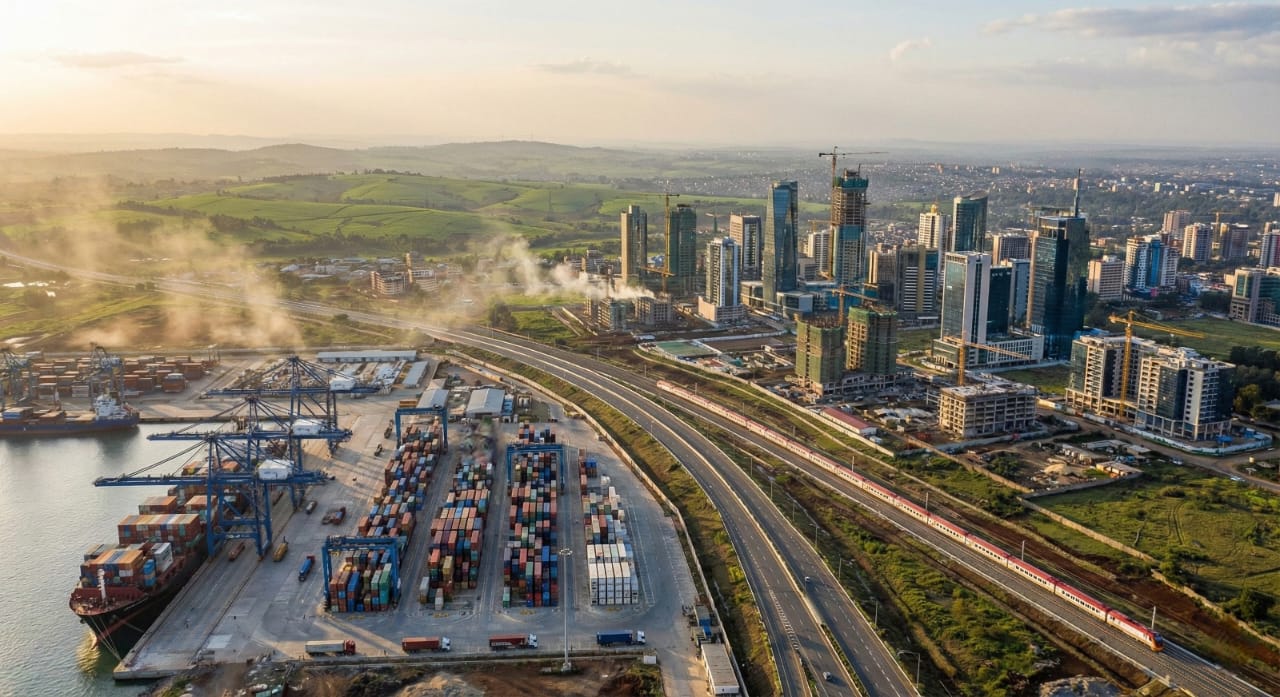
The most striking trend defining the region’s economic landscape in 2025 is the aggressive acceleration of regional integration. The expansion of the East African Community (EAC) has moved beyond bureaucratic treaties to tangible commercial reality. Underpinning this commercial surge is a massive, capital-intensive infrastructure drive that is finally beginning to mature. The years of "white elephant" criticism are slowly fading as projects come online. The completion of mainline welding on the East African Crude Oil Pipeline (EACOP) late this year marks a turning point for the energy sector in Uganda and Tanzania, promising to unlock billions in revenue, despite legitimate environmental concerns.
However, the "hard" infrastructure of rail and pipelines tells only half the story. The "soft" infrastructure of technology has become East Africa’s most potent differentiator. Nairobi’s "Silicon Savannah" label is no longer just a catchy tagline for startups; it has matured into a robust ecosystem of fintech, agri-tech, and logistics platforms that are solving real-world friction. Mobile money, pioneered here, has evolved from simple transfers to complex credit and insurance products that support small-to-medium enterprises (SMEs). This digital maturity is bleeding across borders, with Rwanda positioning itself as a testbed for regulatory innovation and proof-of-concept technologies. The arrival of satellite-based internet services in 2025 has further democratized access, bypassing the need for expensive fiber optic rollout in rural areas and bringing millions of unbanked citizens into the formal economy. Yet, this optimism must be tempered by the severe headwinds that continue to buffet the region. The "elephant in the room" for almost every East African finance ministry is sovereign debt. The era of cheap Eurobond financing is over, and 2025 has been a year of fiscal reckoning. Kenya and Ethiopia, in particular, have had to walk a perilous tightrope—balancing the demands of international creditors with the needs of a restless population. The fiscal consolidation measures required to service these debts—raising taxes and cutting subsidies—have sparked tangible public anger and cost-of-living protests.
Furthermore, the region remains acutely vulnerable to the caprice of climate change.
Amidst these pressures, the demographic clock is ticking louder than ever. East Africa possesses one of the youngest populations on the planet, a "demographic dividend" that is simultaneously a blessing and a threat. The economy is creating jobs, but not fast enough to absorb the millions of graduates entering the market annually. This has led to a thriving but precarious gig economy. The challenge for policymakers in 2026 and beyond is not just generating growth, but generating labor-intensive growth. The shift toward manufacturing is happening, particularly in industrial parks in Ethiopia and Special Economic Zones in Tanzania, but automation and global competition make it difficult to replicate the Asian Tiger model of the 20th century.
Ultimately, East Africa stands at a critical juncture. The path forward lies in deepening the trust between member states to ensure that political squabbles do not derail economic integration. If the region can manage its debt burden without choking off private sector credit, and if it can successfully leverage its tech-savvy youth to drive services and innovation, it is well-positioned to be the continent's most dynamic economic zone. The resilience shown in 2025—growing amidst a global slowdown—suggests that East Africa is no longer just rising; it is actively reshaping its own destiny in a fractured global order.