Hosting the World Cup has traditionally been a financial black hole, a way for nations to buy global influence at a staggering cost. The upcoming 2026 tournament in North America marks a definitive end to this era of excess. The conversation has shifted away from penalty kicks and toward profit margins. This event represents a critical experiment: a move away from vanity projects toward a leaner, economically viable model suited for a polarized world.
Unlike the Qatar 2022 tournament, which was defined by state-funded infrastructure building, or the Russia 2018 games, which were an exercise in soft power, the 2026 tournament—hosted jointly by the United States, Mexico, and Canada—is a distinctively commercial juggernaut. It is a "private equity" World Cup, driven not by government spending, but by existing infrastructure and ruthless corporate maximization.
The End of the "White Elephant"
The primary economic argument against hosting the World Cup has always been the "White Elephant" problem. Countries spend billions building stadiums that sit empty once the final whistle blows. South Africa (2010) and Brazil (2014) are still paying off debts for stadiums that now host little more than local weddings or third-tier matches.
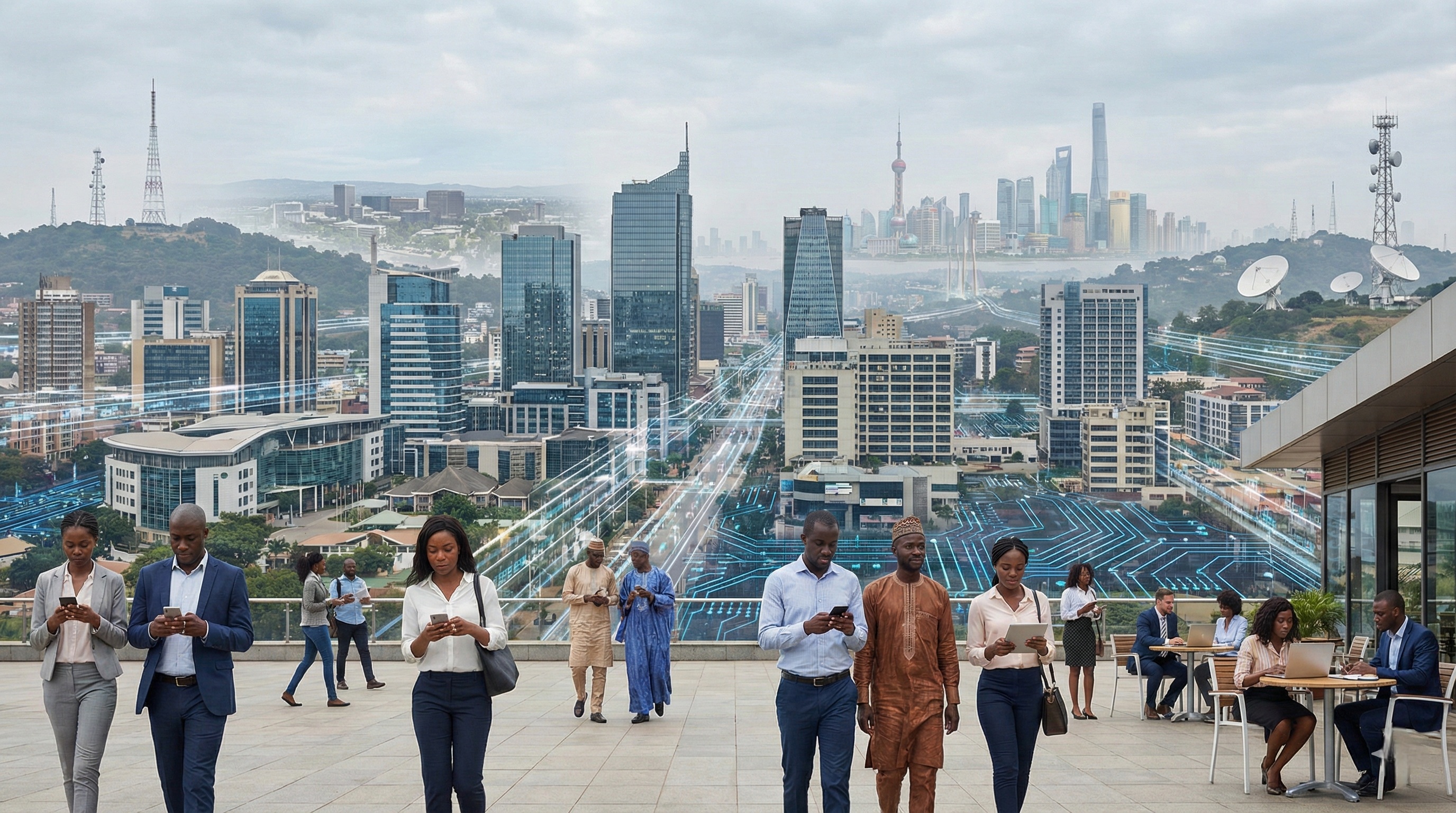
The 2026 North American bid flips this logic. The stadiums already exist. From the dizzying scale of AT&T Stadium in Texas to the historic Azteca in Mexico City, the capital expenditure (CapEx) for this tournament is historically low relative to its scale. The investment is not in concrete, but in connectivity.
This shift has profound implications for the global economy. It signals a move toward "sustainable hosting," where the economic value is derived from tourism services, digital rights, and consumer spending rather than construction contracts. For the first time, the International Monetary Fund (IMF) and private analysts are projecting a net-positive economic impact that isn't just creative accounting.
The Visa Economy and the Global South
However, the economic story of 2026 is not just about American profits; it is about global access. For football fans in the Global South—from Lagos to Karachi to Buenos Aires—the 2026 World Cup presents a formidable economic barrier: the "Visa Wall."
In 2025, visa rejection rates for African and Asian visitors to North America hit historic highs. As we approach kickoff, this bureaucratic friction is creating a secondary "exclusion economy." Travel agencies in the Global South are already pivoting, selling not just tickets, but high-priced "visa consulting" packages. The cost of attending this World Cup will effectively be a tariff on fans from developing nations, further bifurcating the world of sports into the "haves" who can travel and the "have-nots" who must watch digitally. This digital consumption, however, is where the real money lies.
The Streaming Wars: The Real Playing Field
While 80,000 fans will watch the final in New Jersey, 5 billion will watch online. The 2026 World Cup is the first to occur in a fully mature streaming economy. The battle for broadcasting rights has fragmented. In previous years, national broadcasters held monopolies. Today, rights are sliced and diced between traditional TV, streaming giants, and social media platforms.For the first time, "micro-betting"—wager on specific moments like a corner kick or a yellow card—will be integrated directly into live streams. This integration of fintech and sports is expected to generate over $150 billion in betting volume alone, dwarfing the GDP of many small nations. The real winners of the 2026 World Cup may not be the team that lifts the trophy, but the data brokers and fintech platforms processing these billions of micro-transactions.
Conclusion:
The 2026 World Cup will be a celebration of football, but it will also be a mirror reflecting the state of the global economy. It showcases the immense power of the North American consumer market, the widening gap between the Global North and South in terms of mobility, and the total financialization of human attention.
For policymakers and economists, the tournament will be a massive case study. If the US, Mexico, and Canada can pull this off without the debt hangovers of the past, they may set a new standard. If not, it may prove that the era of the global mega-event is finally over.
As the first ball is kicked, remember: you are not just watching a game. You are watching the world’s largest economic engine roaring to life.